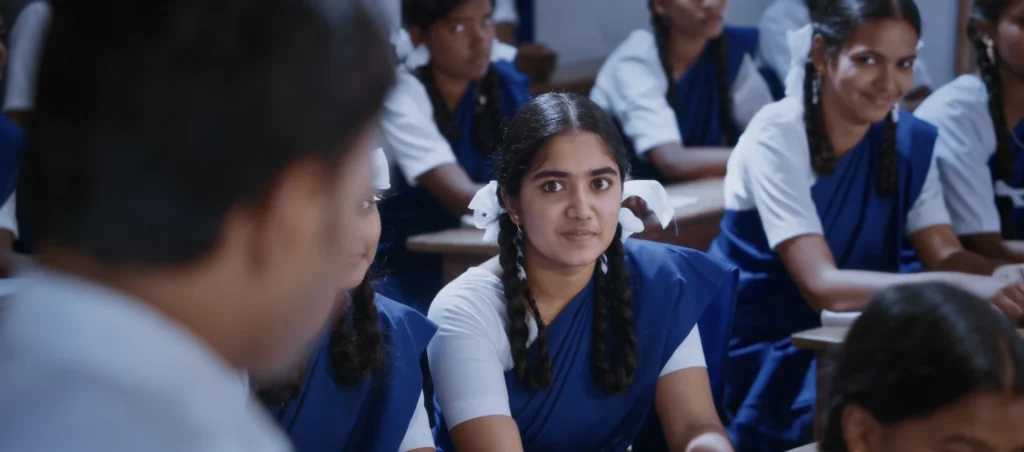
Habeebi Review: There’s a lovely moment in Habeebi when the heroine finally speaks and the hero, who has spent years silently admiring her from a distance, is captivated by the sound of her voice. It’s a small scene, almost understated, yet it perfectly captures what makes Meera Kathiravan’s film so special. Every emotion is allowed to breathe, every relationship is built patiently, and every milestone in these characters’ lives feels earned rather than manufactured. Set against the changing fortunes of a Muslim handloom-weaving community, Habeebi blends an intimate love story with a sprawling family saga that stretches across decades. The climax occasionally reveals the screenplay’s hand a little too clearly, nudging events toward a desired destination, but that remains a minor blemish in an otherwise deeply authentic film that values humanity over melodrama and leaves a lasting emotional imprint.
Set against the backdrop of a predominantly Muslim village where handloom weaving forms the backbone of everyday life, Habeebi unfolds across multiple decades. The story begins when the protagonist is a five-year-old boy growing up in a large joint family. His father is a weaver, and the community depends heavily on traditional handloom work for survival. However, the arrival of power mills gradually destroys that livelihood, pushing families into severe financial hardship. It is a situation that feels authentic because it reflects a reality experienced by countless communities across India.
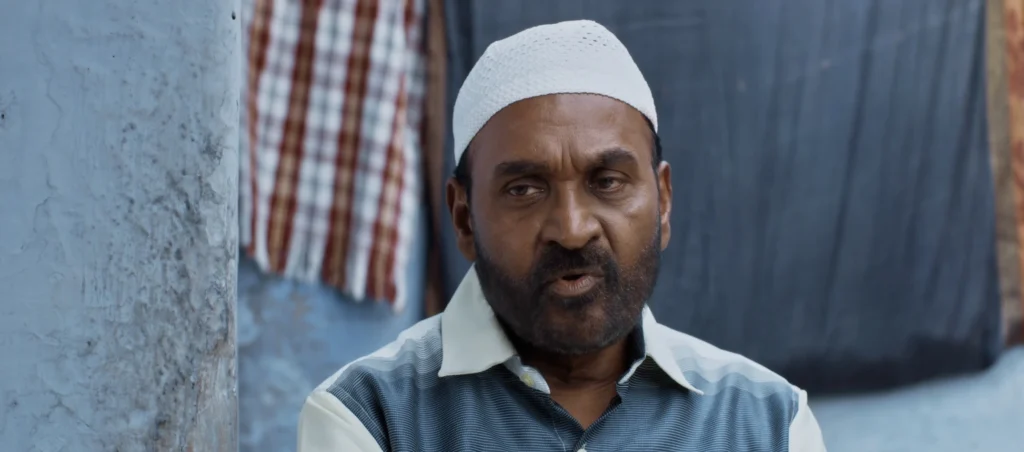
One of the most compelling threads in the film revolves around the hero’s uncle. Faced with economic uncertainty, he joins the growing wave of young men leaving their villages to work abroad. The family benefits financially from his decision, but the emotional cost becomes painfully clear. His wife remains at home while he struggles far away. Money begins to arrive, yet happiness never truly follows. The film captures this contradiction with remarkable sensitivity. It understands that prosperity and fulfilment are not always the same thing.
Running parallel to these family struggles is a tender love story. The protagonist spends his childhood quietly admiring a girl from his school. He follows her everywhere but never gathers the courage to speak about his feelings. His dream is refreshingly simple. Unlike the young men leaving for foreign countries, he wants to marry the woman he loves, remain in his village, and build a peaceful life. Naturally, life has different plans. An unexpected challenge arrives and completely disrupts everything he has imagined for himself. The mystery surrounding this turning point keeps the narrative engaging throughout its lengthy runtime.
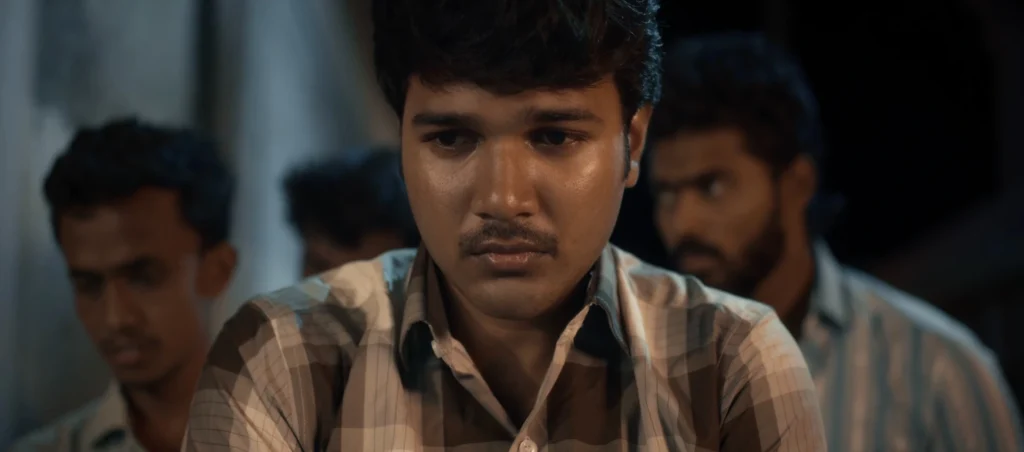
What impressed me most was the film’s balance. Calling Habeebi merely a romance would be inaccurate. At the same time, describing it only as a family drama would also be incomplete. Meera Kathiravan successfully combines both elements without allowing either one to dominate the other. The love story provides warmth and emotional investment, while the family conflicts add weight and realism. This equilibrium prevents the film from slipping into melodrama and helps it maintain a distinctly cinematic quality.
Technically, the film is exceptionally strong. The cinematography deserves particular praise. Many scenes unfold with such naturalism that I felt like an invisible observer witnessing real lives rather than fictional characters. The portrayal of family rituals, celebrations, and everyday interactions feels organic and deeply researched. Instead of presenting a community through stereotypes, the film allows audiences to experience its culture from within. That authenticity becomes one of the movie’s greatest strengths. The editing remains sharp throughout, while Sam C.S.’s background score quietly elevates emotional moments without becoming intrusive.
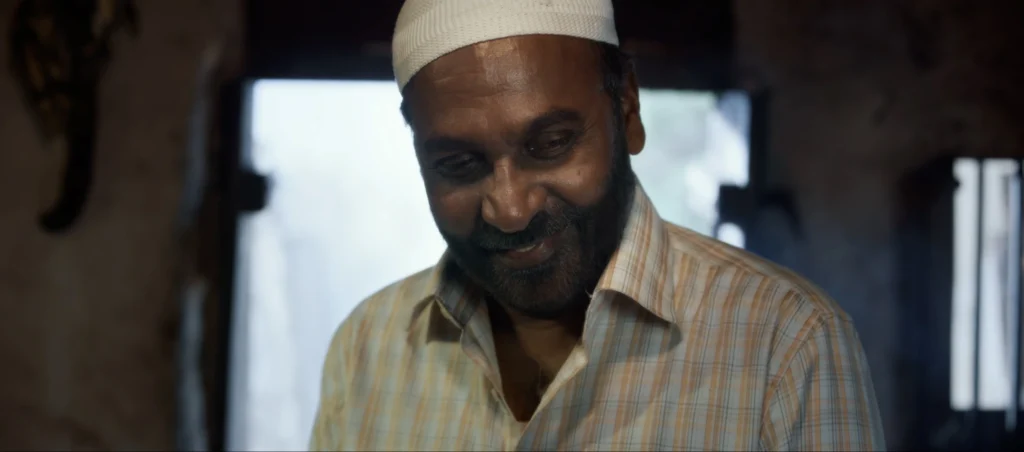
The performances contribute significantly to the film’s effectiveness. Newcomer Esha delivers a convincing and emotionally grounded performance as the protagonist. Malavika Manoj brings sincerity to the female lead, while Dhanasree Sudhakaran leaves a strong impression in the aunt’s role, particularly because she convincingly portrays both younger and older stages of the character. Kasthuri Raja, who plays a pivotal role, initially appears slightly unusual in some early portions, but he becomes increasingly believable as the character ages. By the latter stages of the film, he is among the strongest performers on screen. The principal cast of Esha, Malavika Manoj, Dhanasree Sudhakaran, and Kasthuri Raja forms the emotional backbone of the story.
Another aspect I admired was the film’s treatment of time. Many films take shortcuts when depicting characters growing older. Habeebi avoids that trap. Physical appearances evolve naturally. Weight fluctuations, ageing features, and changing body language help sell the passage of decades. Characters introduced during the protagonist’s childhood remain present throughout the narrative, and their transformations feel believable rather than cosmetic.

The screenplay also contains several memorable touches. There is a particularly effective sequence where the hero becomes trapped in a difficult situation. Instead of immediately revealing the outcome, the film cuts away and later revisits the incident through a flashback. Moments like these keep the storytelling dynamic. I was also charmed by a scene in which the heroine finally speaks and the hero comments on how beautiful her voice is, subtly suggesting that he is hearing it properly for the first time despite years of admiration. Such details enrich the emotional texture of the film.
My only significant reservation concerns the climax. Unlike the rest of the narrative, which unfolds with impressive honesty, the conclusion feels somewhat engineered toward a specific destination. I could sense the screenplay nudging events in a predetermined direction. Even so, the ending remains emotionally satisfying enough that it does not undermine everything that came before it.
What stayed with me long after the film ended was its humanity. Rather than reducing its characters to clichés, Habeebi presents them as ordinary people navigating love, work, sacrifice, faith, and changing times. It feels less like watching a movie and more like spending decades with a family that could easily live next door. That emotional authenticity is rare, and it is what ultimately makes Habeebi such a rewarding experience.
Rating: 4/5
