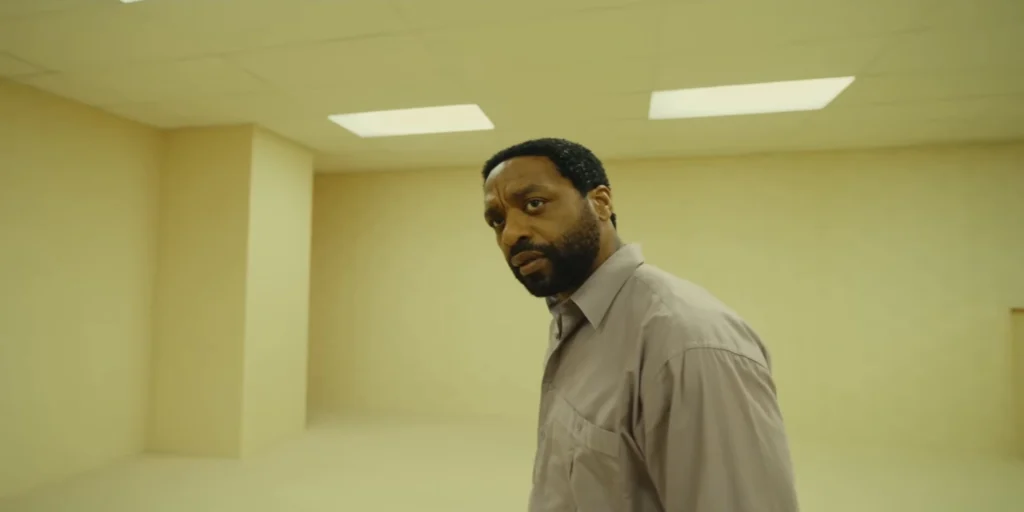
At just 20 years old, Kane Parsons has made one of the most impressive transitions from internet creator to theatrical filmmaker in recent memory, and Backrooms quickly proves that the buzz surrounding him is not misplaced. Expanding a simple online horror concept into a feature-length experience could easily have resulted in a repetitive gimmick, yet Parsons crafts something far more unsettling and ambitious. Rather than relying on cheap jump scares or familiar supernatural tricks, the film embraces psychological horror and science fiction, trapping both its characters and audience inside a mystery that refuses to hand over easy answers. Led by committed performances from Chiwetel Ejiofor and Renate Reinsve, Backrooms turns endless yellow corridors into a source of genuine dread. Its refusal to explain everything may frustrate some viewers, but for those willing to surrender to the unknown, this is an engrossing and deeply unsettling theatrical experience that lingers long after the credits roll.
The story follows a man who discovers that passing through a wall in his workplace leads to an entirely different reality. On the other side lies a seemingly endless network of yellow rooms and corridors that stretch beyond comprehension. As he ventures deeper into this bizarre space, the mystery only grows larger. What are these rooms? Why do they exist? And what exactly is waiting within them? The film gradually explores these questions while refusing to provide easy answers.
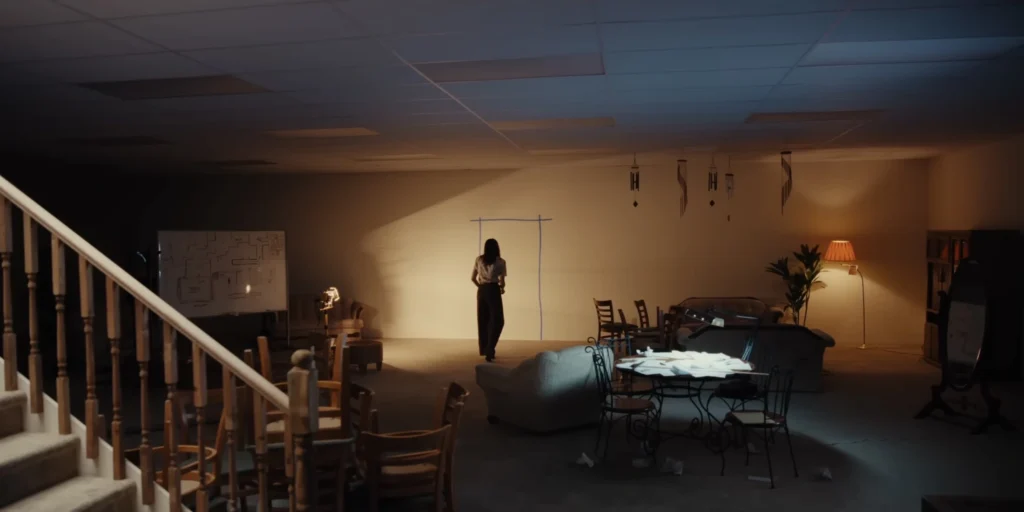
One thing I appreciated immediately is that Backrooms is not a conventional horror film. Anyone expecting ghosts, spirits, jump scares every few minutes, or familiar supernatural formulas may be surprised. Instead, the film blends psychological horror with science fiction, creating an atmosphere where the unknown becomes far more frightening than any visible monster. The narrative constantly places questions inside the viewer’s mind. Even when major revelations arrive, new mysteries emerge. By the time the climax arrives, I found myself desperately searching for explanations. Several crucial moments left me wondering, “If this happened, then why did it happen?” The film deliberately avoids spelling everything out, which may frustrate some viewers but will fascinate others.
What truly kept me invested was the film’s ability to maintain tension throughout its relatively lean runtime of around two hours. There is very little wasted movement. Every journey through those endless hallways feels meaningful because the atmosphere itself becomes a character. The film understands that fear often comes from uncertainty, and it exploits that fear masterfully.
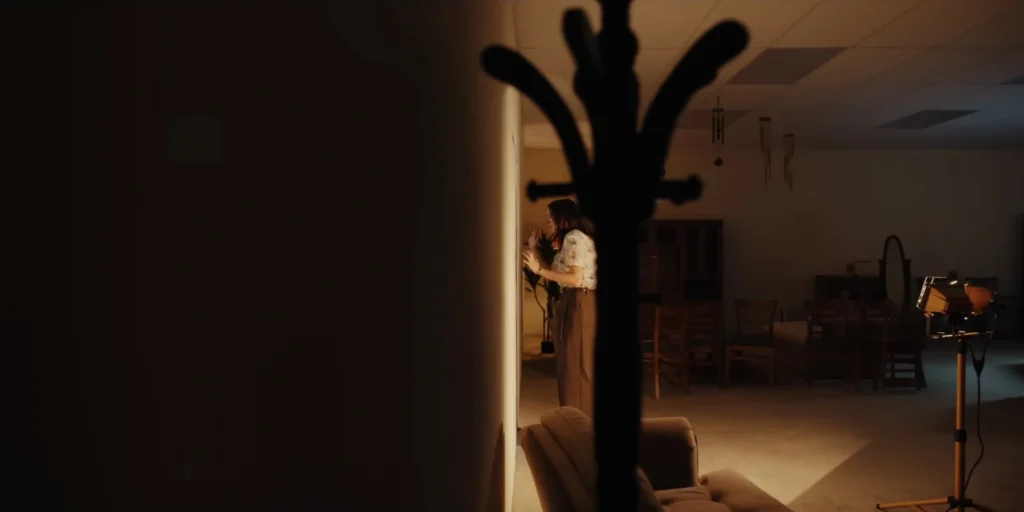
The performances deserve significant praise. Much of the film relies on only a couple of central characters, yet the actors carry the story with remarkable conviction. The cast is led by Chiwetel Ejiofor and Renate Reinsve, whose work anchors the increasingly surreal narrative. Their performances help maintain emotional credibility even when the story ventures into deeply unsettling territory.
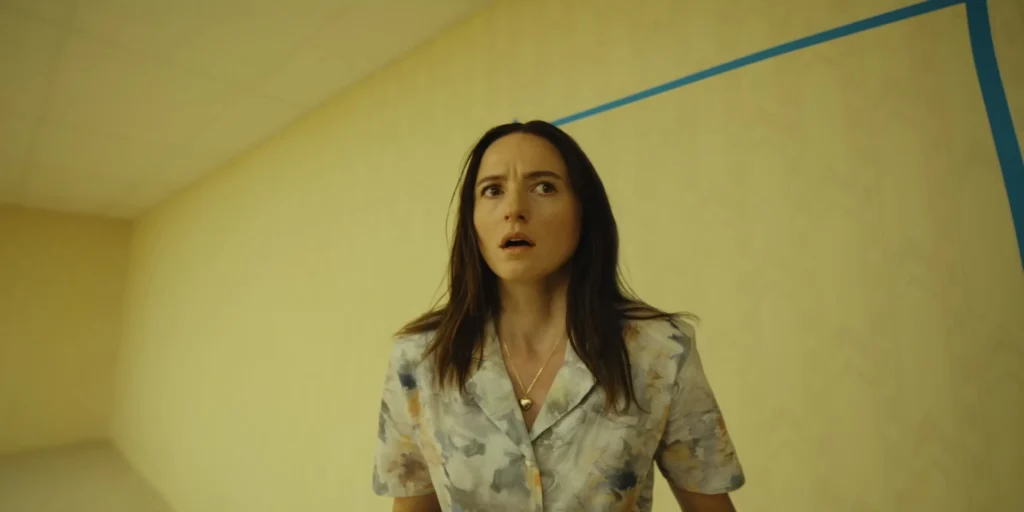
The greatest achievement of Backrooms, however, is its visual design. The endless yellow rooms are simple on paper, yet on screen they become profoundly disturbing. I can easily imagine viewers with claustrophobia feeling uncomfortable as the corridors seem to stretch forever without offering any escape. The film creates a suffocating sense of confinement despite the spaces technically appearing large. More than once, I felt an urge to escape alongside the characters. Few horror films manage to create that level of physical discomfort through atmosphere alone.
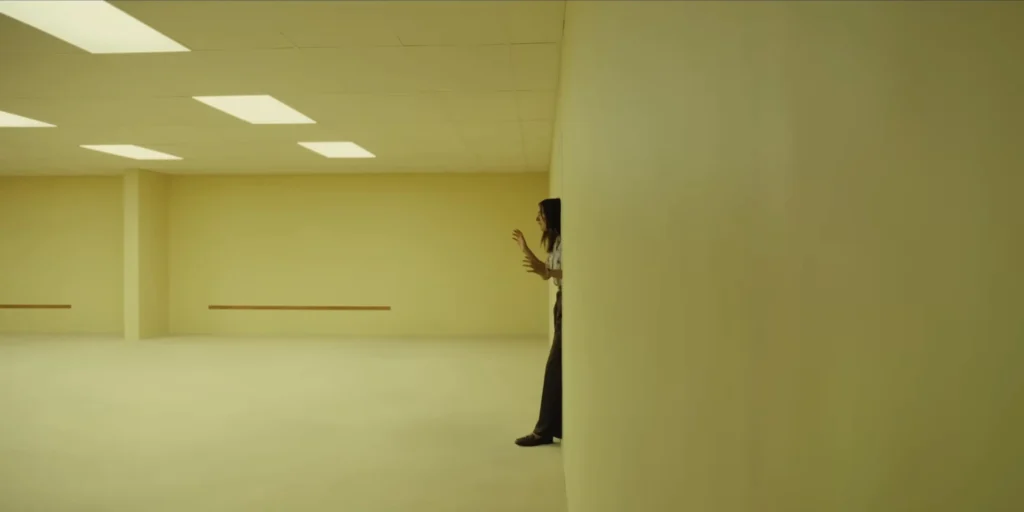
Language is another factor worth mentioning. The film is entirely in English, and viewers who are not comfortable with the language may occasionally struggle with some details. Yet the visual storytelling is so effective that many scenes communicate their meaning without requiring extensive dialogue. Several sequences inside the rooms are powerful enough to work almost like silent cinema, relying purely on imagery, sound, and tension.
Perhaps the most memorable aspect is the film’s final reveal. Without venturing into spoiler territory, I can say that the reveal lands with tremendous impact. It is the kind of moment that instantly makes audiences rethink portions of the story while simultaneously generating even more questions. That balance between revelation and mystery is difficult to achieve, and Backrooms handles it impressively.
I left the theatre convinced that this is a film best experienced on the big screen. The oppressive atmosphere, unsettling sound design, and overwhelming scale of the environments become far more effective in a cinema setting. For fans of psychological horror and science fiction, this is a compelling theatrical experience that demonstrates how imaginative storytelling can accomplish more than massive budgets and familiar formulas.
Rating: 4/5
